

Zero Click Search and the New SEO Reality

A homeowner searches “emergency plumber near me,” sees a map, business hours, review ratings, and a tap-to-call button, then calls a company without ever visiting its website. That is zero click search in action. For a local business, this is not a reason to abandon SEO. It is a reason to stop treating traffic as the only score that matters.
Google is increasingly answering questions directly in search results through AI Overviews, local packs, featured snippets, knowledge panels, product listings, and instant-answer boxes. The click may disappear, but customer intent does not. Businesses that show up clearly at the moment of need can still earn calls, direction requests, brand recognition, and revenue.
The problem is that many marketing plans were built around a simple equation: higher rankings equal more website traffic, and more traffic equals more leads. That equation now has more moving parts. A strong search strategy has to create visibility on the results page, establish trust before the click, and give prospects a clear next action whether they visit your site or not.
What zero click search actually means
A zero click search occurs when someone gets what they need from the search results page and does not click through to a website. Sometimes that is a quick factual answer, such as a business’s phone number or operating hours. Other times, it is a local decision made from reviews, photos, map placement, pricing cues, or a concise AI-generated summary.
Not every no-click search is a lost opportunity. If someone finds your address, sees strong reviews, and requests driving directions, that search served the business. If a current patient checks your office hours, a click would have added little value anyway. The concern is greater when Google answers a high-intent research question using information from other sources and your business never enters the consideration set.
This distinction matters because zero-click behavior affects industries differently. A dentist, attorney, contractor, or medical practice depends heavily on local trust signals and appointment intent. An eCommerce brand may lose more discoverable product traffic when a shopper sees prices, ratings, and product details directly in results. A consultant may benefit from appearing in answers but still need a deeper content path that proves expertise and moves a prospect toward a conversation.
The right response depends on the search, the buyer, and the value of the next step. Chasing clicks from every keyword is not an efficient growth strategy. Winning the searches that lead to calls, forms, appointments, and sales is.
Why zero click search changes SEO reporting
Organic traffic remains valuable, but it is no longer a complete measure of search performance. A decline in clicks can happen even while impressions rise, local visibility improves, and branded demand grows. That does not automatically mean SEO is failing. It may mean your information is being surfaced earlier in the customer journey.
The opposite can also be true. High impressions with no meaningful action may indicate that your content is visible but not persuasive, not well matched to the query, or too generic to earn trust. A search result is now often an advertisement for your credibility before it is a doorway to your website.
Business owners should ask better questions than “Did traffic go up?” Start with: Are we visible for services that produce revenue? Are local searchers calling, requesting directions, or booking? Are branded searches increasing? Are we gaining qualified leads at a sustainable cost?
At Dove Media Marketing, this is why we build marketing infrastructure rather than treating SEO as a monthly ranking report. Search visibility has to connect to a credible brand, a conversion-focused site, accurate local listings, reputation management, and follow-up systems. Otherwise, even a top result can become a missed opportunity.
How to compete when the click disappears
The goal is not to fight the search results page. The goal is to make your business the most credible answer on it.
Own the information customers need immediately
Your business information must be accurate everywhere Google and customers are likely to see it. That includes your primary categories, service areas, hours, phone number, appointment options, photos, and descriptions. For local businesses, an incomplete or neglected Google Business Profile can cost more leads than a dozen minor website edits.
Specificity wins. A general contractor should not rely on a vague description about “quality work.” Show the services, communities, project types, and proof that make a customer confident enough to call. A law firm should make practice areas and consultation paths unmistakable. A medical office should remove friction around insurance, location, scheduling, and patient expectations.
Build content that earns citations and creates demand
AI-generated results and traditional answer boxes tend to favor clear, useful, well-structured information. Publish service pages that explain what you do, who it is for, what the process looks like, and what makes your approach different. Support them with practical articles that answer real pre-purchase questions your sales team hears every week.
Do not write content solely to win a snippet. A short answer may increase visibility, but the page still needs enough depth to persuade the person who does click. For example, an article about roof repair costs can provide a direct price-range answer, then explain the factors that change the estimate, warning signs that require fast action, and what a professional inspection includes.
That approach serves both audiences: the searcher who needs a fast answer and the buyer who needs confidence. It also gives search engines more context about your expertise than a thin, keyword-stuffed page ever will.
Treat reviews as search assets
Reviews influence local rankings, but their business value goes further. A prospect comparing three businesses in a map pack may make a decision based on rating volume, recency, owner responses, and the details customers mention. Strong review management is part of your zero-click conversion strategy.
Ask for reviews consistently after successful work. Respond professionally to positive and negative feedback. Look for recurring language in reviews, such as “fast response,” “explained everything,” or “fair pricing,” because those are the proof points future customers care about. Then reinforce those themes in your messaging, service pages, and sales process.
Give searchers more than one way to act
If the searcher does click, the landing experience must match the promise of the result. A mobile visitor looking for an emergency HVAC repair should not have to hunt through a generic homepage. They should see the service, service area, trust indicators, and a direct path to call or request help.
The same principle applies off-site. Keep call tracking, form routing, appointment systems, and CRM follow-up connected. A lead from a local listing that sits unanswered for hours is not a search problem. It is an operational problem that marketing should expose and help solve.
Measure zero click search by business impact
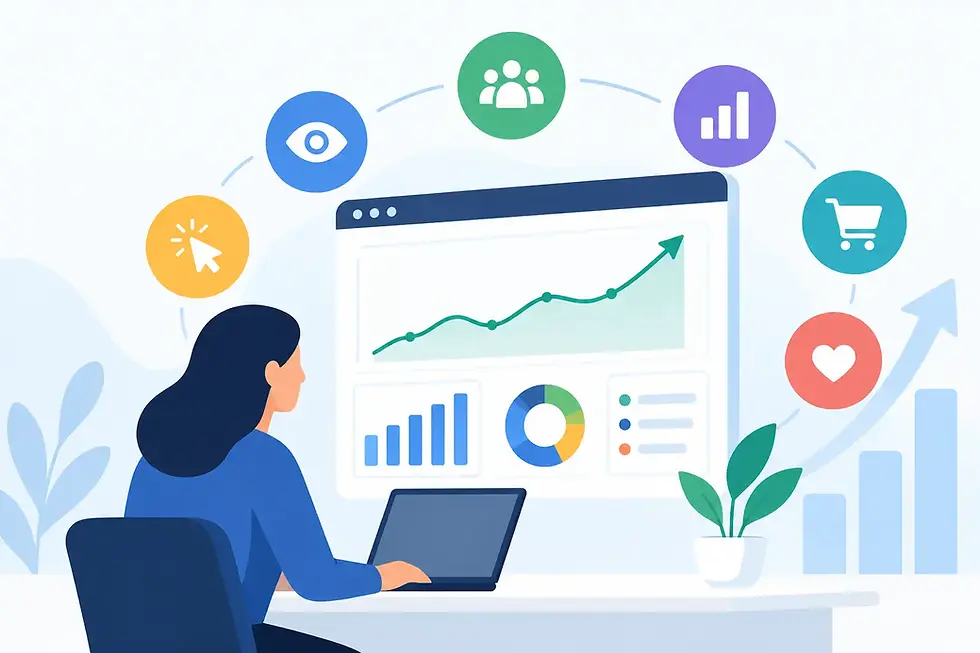
A smarter dashboard combines search data with lead and revenue data. Track organic impressions and rankings, but pair them with calls from business listings, direction requests, appointment bookings, form submissions, and qualified leads by service line. Where possible, connect closed revenue back to the channel and search theme that started the conversation.
Branded search is another useful signal. When more people search for your company by name, it often means that visibility, referrals, reviews, social proof, or offline marketing is producing recognition. That demand is harder for competitors to intercept than generic service searches.
Do not overreact to a single traffic drop. Review the search queries behind the change. If informational queries are losing clicks while service-page conversions and local actions are rising, the business may be improving despite a softer traffic chart. If high-value service queries are losing visibility, that deserves immediate attention.
The trade-off: visibility without ownership
There is a real downside to zero click search: Google owns the search environment, the result layout, and increasingly the answer itself. You cannot control every summary, map placement, or AI Overview. You also do not want your entire customer acquisition engine dependent on one platform.
That is why search should feed assets you own: a high-converting website, an email list, a customer database, a review base, and a reputation that generates referrals. Search can create the first impression, but your systems must carry the relationship forward.
The businesses that win will not be the ones demanding a click from every searcher. They will be the ones whose name, proof, and next step are clear enough that the right customer chooses them before the competitors have a chance to catch up.


Comments